Chapters 1 and 2 of THE WITCH OF WAPPING: A GHOST STORY by Alan M. Clark and Rebecca J. Allred

Chapter 1—The House

Wapping, London

1840

The soon-to-be occupant of the house arrives before nightfall. Through his laudanum distorted vision, he sees shadows that stretch and bend at unlikely angles in the dimming sunlight. The one he casts seems to reach eastward toward the benighted horizon, as if that one part of him might yet escape. He lingers at the edge of the footway, giving his shadow every opportunity to succeed where he, himself, has failed. One of the two women flanking him prompts him to move forward almost immediately. His silent, darkling companion gives up on escape and dutifully follows. Unperturbed, the man turns and faces what he believes will be his final destination.

The house stands two stories high and is noticeably crooked. An old neighborhood, many of the homes, especially those with overhanging upper floors, are bent or sagging. Wooden bracing between some of the houses helps keep them upright. Neighboring structures on two sides lean toward the house as if to discourage it from moving in a northwesterly direction. Dim, flickering light beckons from each of the house’s three south-facing windows, one on the first floor and two above, all of them curtained to discourage curious neighbors or other, wandering eyes. The man directs his impassive gaze to the second story windows. Their curtains are as dull and gray as the eyes he’s fixed upon them.

What is meant to be a place of respite and wellness is destined to become a prison and grave. And worse. The man’s first inkling of what is to come occurs as his charges pull him toward the stairs running down from the right-hand side of the structure to the servants’ entrance.

Gait unsteady, he descends the stairs, supported by the women to his left. Below ground level, he faces one entrance to the area and two small windows. The other woman has struck a match and lit a lamp. She turns a key in the lock and opens the door.

Before entering, as though checking to see if he has truly arrived at this moment, the man reaches up to his face, running one hand through his lion’s-mane of hair, while the other tugs at his uneven beard. Both are thick and dark and wild.

Wild like him.

Wild like a rabid cur—so his nurse will say of him. She is but the first of what will seem an endless parade of women charged with feeding, bathing, and otherwise keeping the occupant of the house sedated and confined to a room on the second floor.

Wild like the rumors about the house ignited by those who pass close enough to hear the occupant’s pained cries. Like a recurring fever, that gossip will burn quietly through Wapping for decades.

The laudanum has blunted his desire to turn and flee and taken all the fight out of him.

He takes a deep breath, lets it out, and enters the house.

~ ~ ~

The room on the second floor is uniquely crafted, though its contents are largely unremarkable. A bed, comfortable but not elegant, is positioned beside the north wall. A candle and a bible rest atop a small bedstead equipped with a single drawer. Inside the drawer are several fragments of charred wood and a dozen leaves of paper. Inside the Bible are a dozen more leaves of paper upon which the occupant has drawn the figures of a dozen undressed men, each in a different, provocative position.

An east-facing window peers down onto the street. The window is barred, and each of the four walls, the ceiling, and the floor are covered with a thick layer of quilted canvas padding. Even the door is insulated, except for a narrow slot at the bottom through which food and drink are passed thrice daily, and a smooth metal plate that occupies the space where a door knob and latch keyhole ought to be.

The occupant spends his time accomplishing little to nothing. Today, he worries at his teeth, which seem to him pointlessly square.

Later he sits before the door to his padded cell, lips moving imperceptibly as he utters for himself:

“I am Sir Geoffrey Webb. I am not mad.

“I am Geoffrey Webb. I am not mad, and this body is mine.

“I am Mr. Webb. I am not mad. You shall have no further say.

“I am Geoffrey. I am not mad, and I will not allow you to bite her.…”

Chapter 2—Rollo

Wapping, London

1897

Samuel Sutton—Sam, as we called him—saved my life when he were just eight years old. At the time, he had no cause to help me, as I were doing my wicked best to give him a nobbling.

A small kid, Sam suffered the worst of our neighborhood in Wapping. We all picked on him. He were the son of Margaret Sutton, a woman of the neighborhood that many shunned and some thought to be in league with the devil.

I don’t remember how it started, but me and my mates, Zeb and Gillan, had Sam cornered in a dead end alley off Brewhouse Lane—brick and mortar and no way out. I would show everyone what a bludger I could be. I’d’ve been ten, a snotter guttersnipe with rampsman dreams.

“Give him a proper do-down, Rollo,” Gillan shouted, and I struck Sam a blow to the bonebox.

“I don’t want to fight,” he said, staggering back and coming up against the bricks.

That were laughable—we all had to fight.

I gave Sam’s smeller a blow what made it bleed.

My mates cheered.

Wiping his nose and seeing the blood come away on his hand, his face twisted into a mask so vicious, if I hadn’t seen it happen, I shouldn’t have recognized him. Then the bricky little squeaker flung himself at me and landed a blow to my gut, one what shouldn’t have hurt as much as it did. But I’d been aching there for a few days. I fell to the wet stones, holding myself against the pain. I also held my cries to keep from embarrassing myself more than I already had done.

Gillan and Zeb, the cowards, had backed off, as if Sam, small as he were, had bested me and they’d suddenly grown afraid of him.

Sam’s face lost its scowl. He looked me over with a thoughtful, troubled gaze, knelt beside me, and asked in a weary voice, “Where does it hurt?”

I tried to shrug him off and get up. A stabbing pain, what got worse as I moved, forced me to become still.

While I lay on the paving stones, he slowly pushed his stiffened fingers into the right side of my gut—uncomfortable without hurting much.

Then he pulled his fingers away quickly. That brought the pain to a sharp point, and I hashed my last meal all over us.

“Appendicitis,” Sam said, wiping hash from his face. He looked to Zeb and Gillan. “Help me carry him to Mum’s surgery.”

They hauled me to Margaret Sutton’s house in Globe Street, where she most often earned helping women end their quickening. I don’t remember much about what happened until I awoke on a cot in an odd room with a stitched up hole in my gut. The drugs she’d given me before the surgery left me somewhat addled.

Margaret Sutton sat in a chair beside my cot. “I’m quite the seamstress,” she said as I inspected the wound.

I’d been patched and sewn up enough in my life to know by the look of it that she had done a good job. “Thank you.”

I grew uneasy with her watching me without speaking. To escape her scrutiny, I looked around.

The walls were quilted canvas, with drawings of doors and the parts of doors on the cloth. Some of the quilt stuffing hung from tears in the canvas. The true door, missing the knob on the inside, stood slightly ajar.

“Whilst you likely will not feel up to it for a while,” she said, “I must ask you not to wander through the house. I am ministering to others here and I don’t want you to startle them.”

“What do I owe?” I asked.

“I will have to think about that,” she said, “since I know you have no steady way to earn.”

“Why are the walls like that?”

“Not that it’s yours to know, but long ago, a member of my husband’s family was kept here, an uncle named Geoffrey Webb. The man was quite mad.”

A vaguely familiar name, even if I couldn’t place it.

“Given the chance,” she added, “he might have hurt himself or others.”

Then Margaret dropped her serious tone and spoke to me almost as if to a friend. From what I knew of her, I’d say she had no friends. Her son spent more time on the street than at home. Sam did that even though he had to go up against guys like me and my mates who gave him nothing but grief. In that moment I pitied Margaret.

“Geoffrey had been knighted,” she said.

“Oh, a war hero?”

“No, nothing like that,” she said with a scoffing chuckle. “He was knighted for his charitable work. Otherwise, when he started causing trouble, he’d have been locked away in an asylum to rot.”

“What trouble?”

“Indiscretions with young men and later some violence as well. I don’t know of what sort. I think that was merely an excuse to put away a man who had become a family embarrassment. Instead of an asylum, the family put him here and kept him here for many years. In that time, he did the drawings on the walls. The padding helped keep him from hurting himself.”

“Where is he now?”

“I believe he died in 1853. The house stood empty until I opened my surgery here in 1883.”

Margaret stood to leave and said in her normal, too-serious voice, “Behave yourself and maybe I’ll show you how they kept him from hurting his minders.”

Something about her manner in that moment put a fear in me. Her slight smile had no charity or humor, as she turned away and left the room, pushing the door almost shut.

I knew I had forgot to be frightened of her. Or maybe the drugs she used on me had finally worn off and I could think again.

Everyone knew the rumors of Sam’s mum being a witch. They had been around since before I came along. I imagined her returning with straps to lash me to the bed or a surgeon’s knife to cut off my arms. I hadn’t been so afraid since I were a small child.

And the name Geoffrey Webb stuck in my head, as if by speaking his name, Margaret had awakened the mysterious knight, himself, and he meant to pass on to me whatever madness he’d once suffered. I found myself repeating his name silently over and over. Days passed before I shook the habit.

As I healed up, Margaret checked on me now and then, often very chatty, as though she were lonely. What could she get from a conversation with the likes of me? I kept thinking she wanted something from me she didn’t have the words to ask for.

The remainder of my stay, I worried what she might bring through that knobless door. Turned out, I had unfounded fears.

One day, she brought in a German game, Stern-Halma, with marbles on a board. While we played, she talked about Sam. The way she spoke of him, I didn’t think she cared for him much, which left me unable to account for her next words: “Should you persuade him to come home, I’d consider your account square.”

I might have been indebted to Margaret Sutton, but I owed Sam my life. If he’d decided to run away from home, I wouldn’t get in his way. “He would not deem that any of my business,” I told her.

Margaret Sutton looked at me, vexed. “Errands, then,” she said, and stood. “Yes, my very own loblolly boy.”

I didn’t question her, though I knew that to be a type of ship’s boy, one attached to the surgeon. She helped me to stand and showed me the door.

The debt to his mum aside, I would not forget Sam’s kindness in the midst of my cruelty. Thereafter, I did my best to repay him with friendship.


Click here to purchase the paperback novel from The River’s Edge.

Or purchase the paperback or Kindle ebook on Amazon.com.

Also available in paperback and one other ebook format (ePub) from most online retailers.

NIGHT BIRDS on an Inovative Website for Books

I was asked to write a post about one of my novels for Shepherd.com, an innovative new site for books and authors, whose tag line is “Discover the Best Books.”

I suggested that I write one with Lisa Snellings about our collaborative novel, Night Birds. Here’s the description of the novel:

In Night Birds, Lucy's grandmother, Annie Maude, may be a witch, her school's lunch lady might be a murderer, and a mysterious figure stalks her in the small South Carolina town where she lives. The chapters consider themes of mental illness, religion, sexual orientation, witchcraft, and death as seen through the eyes of this plucky girl growing up in a haunted house in the 1960's. Charming, provocative, funny, and creepy as Hell, Night Birds will shake you up before leaving you all warm and fuzzy inside.

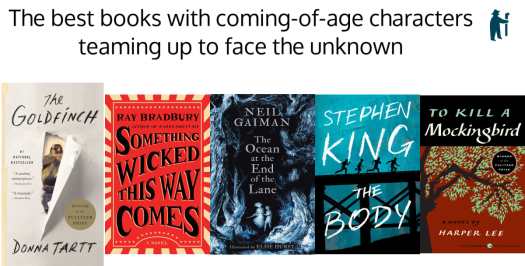
The suggestion approved by Shepherd.com, we received a template to fill out. It included questions about us, the novel, and what five books by other authors were our favorites that might fall within a similar category. We were asked to give that category a name that would become the title of our post. That title had to begin with “The best books…” The image below shows the title we chose and the five books we selected.

We were asked to write about our personal experience of reading those books.  Here’s the one we wrote about The Body by Stephen King:

The Body is Gordie’s odyssey into imagination. As we would be inclined to do, he wants to see the dead boy out of morbid curiosity. He also wants to be the hero who found the body. The odyssey tests and reveals Gordie’s character and that of his three friends. As with the boys, we bear some lonely disappointments and pains. We’d be going to see the dead body merely so we could think to ourselves, at least that’s not me. Perhaps that’s what motivates them too. Who doesn’t do that? Yet their quest doesn’t lead only to an unknown dead boy, but to the dead boy in all of them, perhaps all of us. They are brought together as one by the experience and win the prize—they are alive.

This was a fun process for us and I would recommend it to other authors as a way to help audiences find books they like.

See our full post at Shepherd.com.

—Alan M. Clark

Eugene, Oregon

Fallen Giants of the Points—an Interview with John Linwood Grant

(Greydogtales has kindly allowed this blog post to appear here on The River’s Edge Blog.) 

Today’s special – an extensive interview with Alan M Clark, award-winning artist and writer, on his recent novel Fallen Giants of the Points (IFD Publishing, 2021), something which should be of interest to novel writers in general, and those who use historical settings in particular.

Most readers will know Alan from his Jack the Ripper Victims series, widely praised for its focus on the real women of Whitechapel in the 1880s, where their lives, their hopes and failures, are what truly matters – not the murderer. His latest book, set some forty years before that terrible autumn and a continent away, revisits poverty and deprivation to commence a new and epic journey:

A novel inspired in part by the early gangs of New York, this sprawling adventure is also a western, a coming of age story, and a tale of redemption that carries readers from the streets of infamous Five Points, New York City in the 1840s to Gold Rush era San Francisco. Told from the point of view of two dauntless orphaned children, Alta Mae and Cedric…

It’s a rattling good read, skillfully done – we dipped in from curiosity, but found ourselves reading the whole thing through, and glad we did. So we cornered Alan and got the full story what lay behind the book – his approach, his inspirations, and his thoughts on some of the issues raised.

fallen giants
 alan m clark

FALLEN GIANTS

greydog: Alan, welcome back to greydogtales. First of all, although we’re most familiar with your powerful late Victorian fiction set in England, Fallen Giants seems to fall within your ‘Early Americana’ body of work, one which includes The Door that Faced West and A Parliament of Crows. Both of those books were inspired by true events –Fallen Giants is, as far as we know, purely fictional, albeit rich with genuine period detail and historical themes. What inspired you to take this one on?

alan: I started out wanting to write a novel set, at least in part, in The Old Brewery in Five Points, New York City. The place has a role in Martin Scorsese’s film, The Gangs of New York, but we get mere glimpses of it, and much of its character is missing. For years, I’d been fascinated with The Old Brewery’s history as a haven for criminals and the extremely squalid nature of the place as a tenement. While the Old Brewery was a brewery, the three-story structure had been expanded with numerous additions and ended up looking like several structures jammed haphazardly together. It became a tenement some time in the 1830s. 

The descriptions of the place as a tenement beggar belief—the numbers of people residing there, the debauchery, the murder rate on the premises—yet all descriptions I’ve found, though from different sources and worded differently, seem to be fairly consistent. To rid the city of the place, a charity bought it and razed it to the ground. I wouldn’t be surprised to learn they’d then sown that ground with salt to prevent another crop of criminals from growing there. If they did, it didn’t work—that part of New York City has bred some of the worst gang violence in history.

So then I had to bone up on the criminal and political gangs of the 1840s—the time period of my story—in and around Five Points. The Bowery Boys and other Protestant, nativist gangs caught my attention because their politics were so similar to that of the MAGA crowd of today: Their bigotries, their use of outrageous conspiracy theories, and just bald-faced lies to manipulate people, to divide and conquer politically. In the decades following the 1840s, their politics would go a long way toward building the Know Nothing Party, a nationalist group of some power in the late 19th century.

I discovered that members of the nativist gangs of New York joined up to fight the Mexicans in California during the Mexican-American War. The notion of Manifest Destiny had Americans enthralled in that time, and the idea of westward expansion had become so popular that the small number of Mexicans on the West Coast didn’t stand a chance of keeping the land they’d claimed as their own. Gold was discovered near the end of hostilities. When the war ended, and the New York gang members were mustered out of service, some chose to stay in California. Many Mexican civilians remained as well. Some of the white, Protestant Americans, arriving by the day along the California Trail during the Gold Rush, didn’t want to share California with the brown, Catholic, Spanish-speaking people. The Nativist Gang members who had stayed saw an opportunity in that. They formed a new gang called the Hounds, and hired themselves out to merchants and politicians as a private security force to run the Mexican’s out of the area.

With all that, I decided I’d found the historical bones of the tale I wanted to tell. Now I just had to create characters to move around in it and help me “see” the terrain of that history and the story that might unfold within it.

 other americana also from alan

greydog: How did you settle on telling the tale from the point of view of two children, the girl, Alta Mae, and her younger brother, Cedric, rather than the adults?

alan: I needed characters that could represent young America herself. The orphaned children emerge from the cultural melting pot of New York City. They are innocents in a lot of ways, not worldly, but canny children of the streets with pluck. Like many orphaned children of that time, they were concerned with keeping their liberty rather than working in the service of others, either as adopted children required to labor for a household or farm, or sold through contract as labor for some industry. They engage in criminal behavior to survive on the street, but are not heartless and cruel. Many of those aspects of their characters speak to me of early Americans in general, a downtrodden and flawed but capable bunch, with strange notions about gaining and keeping their liberty, a sizable share of them with criminal backgrounds.

Photo by Jacob Riis. The photo was created in the 1880s, forty years after the timeline of the novel, and that just goes to show how little changed for homeless children in New York City over the decades.

greydog: The children are as young as five and seven when the story begins. What was it like trying to depict a child’s thinking and motivations? Presumably you were able to draw on the fact that children exposed to such harsh conditions had to develop a degree of ‘know-how’ just to survive – more than sheltered or advantaged children.

alan: Yes, I think we like and respect them because they are toughened enough by their experience growing up in Five Points to be rather fearless. That toughness was handy while considering what they’d be willing to do in dire circumstances, of which there are many in the narrative.

In writing from a child’s perspective, I try to narrow the scope of my understanding of what they encounter, as if I only have their experience to draw on. They make simpler connection in understanding than I might, ones that are often naive, or even laughable, depending on their age. In communicating with others, they more often take people literally. Here’s an exchange of dialogue that might demonstrate that last idea:

Adult: “Please accept my condolences.”

Child: Not knowing what condolences were, I thought he would hand me something. Like a goosecap, I just stood there looking at him, waiting. A moment passed before he nodded and walked away.

Since they age by several years in the course of the narrative, I had to adjust my approach to depicting them as the tale progressed, to allow for the greater understanding that they gain over time.

greydog: The chapters alternate between the point of view of Alta Mae and that of Cedric. Did this arise as a method of revealing different aspects of the overall story, or for other reasons—and were you ever tempted to add in chapters seen through the older brother Egan’s eyes?

alan: I was never tempted to add chapters from Egan’s POV. He, too, is an orphan, but several years older and not at all the innocent that his younger siblings are.

Bouncing back and forth between Alta Mae and Cedric, I could have two views of the same thing if needed, I could show differences in their personalities, and how they could be drawn together as fiercely loyal allies, or separated as enemies, at least temporarily, with a sense of betrayal. Having survived together on the streets since earliest childhood, they had naturally developed resentments toward each other. The hard feelings that come between them threaten their chances of reaching shared goals—just another bit of conflict thrown into the mix to make the drama multi-layered, and human.

Frontispiece for Fallen Giants of the Points. “The Tenements” © copyright 2021 Alan M. Clark. Colored pencil on gray-green paper.

greydog: The novel starts out with the children believing their parents are giants composed of animated clusters of buildings. It’s a powerful piece of imagery. What inspired that aspect, and how did you set out to make it believable?

alan: Fallen giants as those who were looked up to but have fallen from grace is a key theme explored in the novel, so why not take it literally as well, I thought.

My own weird beliefs when young told me it was plausible that children of five and seven might believe such things. And the “giants” thing was actually inspired by my own experience—I was maybe five when my grandparents took my brother and me to a baseball game. The grownups talked up how exciting it would be to see the Giants play—this was when the Giants were a New York team. I suppose I didn’t think too hard about what the Giants were like until we got to Shea Stadium and I saw the high ceilings. Then I became afraid, because I knew we were truly going to be exposed to real giants. That is a hazy memory, but an indelible one.

To make that believable in the novel, I show the conversation in which Egan presents the lie. Here it is from Cedric’s memory (abbreviated):

“Our Ma were a giant prostitute,” Egan told us. “She died shortly after giving birth to you, Cedric, and fell dead along Little Water Street. People took up inside her.”

“They lived inside her?” Alta Mae asked.

“Yes—still do—but you have to understand she were made of houses. We’ve visited her corpse many times. It now looks like houses along a dead end.” (In that day, several houses in a row under the same landlord might be considered one tenement)

“The Cow Bay tenement?” she asked, tilting her head this way and that.

“Yes.”

Alta Mae gave Egan a withering look, her lips drawn back. “She couldn’t move if she were houses.”

“Little girl,” he said with a big, loving smile, “there are more things possible than you’ve known or seen in your short life.”

She shook her head slowly, as if unsure.

Egan nodded, his face open and truthful, or so it seemed.

Alta Mae frowned, squinted at the bright sky, then nodded to show she understood.

And, so, I took his words as true.

Egan tells them that their father, also dead, was a drunkard and is the tenement known as the Old Brewery. Alta Mae struggles to understand how that’s possible and finally works it out in her head:

I remember some of how I’d found my own truth in his lie. Must have been six years old when I saw the head of a figure in each of two windows set close together in the Old Brewery’s main building. As they moved about, as if together, I thought of them as Papa’s blinkers looking out at me. Never mind he was supposed to be dead. Two sets of five privies along the North side became Papa’s toes. I pictured him wiggling them and startling folks inside doing their business. The long brick parts, set close together with a corridor between, I had as his legs. Along the west side, a couple of splintered sheds, with boards poking out this way and that became his hands and fingers. In the largest chamber, which I knew to be his gut and chest, stood the old abandoned brewing equipage: a giant copper tank, vats, and barrels. They had to be Papa’s bread bag, sweetmeats, and giblets.

Here’s an example of one of several dreams Alta Mae has in which her parents are alive and moving around:

Sometimes folks fell out of Ma. Saw a cove and his prostitute, in the midst of passionate missionary hogmagundy, fall from a window in the house of her bosom. Dreamt once that Ma and Papa paused to kiss, and a man ran up to a tap in Papa’s ankle and drew off a pail of whiskey.They’re just the sad fancies of a girl who longed to know her parents, I suppose.

Because they believed the untruth at such an early age, they cannot shake it from their imaginations later, even when they know better. This is in part because, as orphans, they have a deep need to know something of their origins.

greydog:The narrative and the dialogue are peppered with slang. How much research did that take, and how did you get it to blend in?

alan: People of America in the mid 19th Century would not likely say, “How cute is that?” as a rhetorical question, but they would have their own interesting expressions. The slang is much like any other elements that tells the audience they are not in Kansas anymore. Of course, getting the atmosphere of the period right helps the audience to more easily imagine the time and circumstances in the story. The trick of letting the audience in on the meaning of slang terms is making it clear through inference. Here’s an example using the slang term “dimber:”

They thought me a boy. And why shouldn’t they? I wasn’t a particularly dimber girl. Dressing as I did, in what rags I could find to keep warm, woolen cap on my head, pulled down over my hair, I’d hidden what prettiness I may have had.

With almost a decade of writing my Jack the Ripper Victims Series, I’d used in dialogue a lot of British slang, that of the sea faring, that from the streets of London—the thieve’s cant, among others. I knew that early New York City, much of it settled by English immigrants, had slang that borrowed a lot from those same sources. I found a glossary of the slang used in New York City in the time period of my tale. Here’s what I put in the front of the book to explain (abbreviated):

Many slang terms appear in this book. The reader can find most of it defined in a book published in 1849, Vocabulum, or, The Rogue’s Lexicon, by George W. Matsell. The book is available for free in a Project Gutenberg ebook.

George W. Matsell was the first New York City Police Commissioner. He wrote the dictionary of American Thieves’ cant to make certain his police officers understood what was being said on the streets, as many criminals spoke to one another while assuming others would not understand their slang.

History and Prejudice

greydog: The young characters are unreliable and flawed narrators, who must change and grow with the events in the tale. Why did you burden them with so many outrageous untruths and bigotries?

alan: The flaws in their understanding are important since I wanted to demonstrate the changes that came over them with time and experience in the wider world; ones that parallel many of the changes that came to America, herself, with time.

Egan is eight years older than Alta Mae, and represents a father figure for his younger siblings. At first, he is with them on the streets. When an adolescent, he hooks up with the Bowery Boys as a scout and messenger. By this association, he is afforded comforts that Alta Mae and Cedric are not. He gets to sleep in a shed, while they have to brave the New York winter nights. Egan still does his best to help them get by, but he is slowly moving away from then, trying to make his life better. He lies a lot, and with the gullibility of youth and their respect for him as patriarch, Alta Mae and Cedric are easy to manipulate. He has a bit of fun with seeing what they’d believe. He also fills them with the bigotries and anti-immigrant world views of the nativist Bowery Boys to whom he is in thrall.

greydog: Speaking of bigotries, the anti-Catholic sentiments of some characters are mentioned prominently, echoing factual events such as the earlier nativist riots in America, and those later clashes featured in Asbury’s 1927 book The Gangs of New York (filmed in 2002). Such prejudice continued well into the twentieth century—did you find this a difficult issue to cover?

alan: Not really. The anti-Catholic prejudice is perhaps less a factor in the U.S. today. I hope so. In my life, I can only remember one person ever saying anything to me directly that was disparaging about another just because of their catholic faith. Still, like other bigotries, it’s basic xenophobia, and comes partly from our human need to find scapegoats for our fear and anger. Bigotry is one of the major themes explored in the novel.

Tape Primer Sharps rifle like one used by Argus Leventus in the novel

greydog: Without giving too much away, Fallen Giants as a whole touches on many social justice issues with which we deal today, and the ending includes a degree of positivity. The social construct of ‘race’—and its artificiality—is also an important factor. What did you hope to accomplish with that?

alan: Because I found so many parallels between the nativist gang members in the 19th century and the nationalists encouraged by the last United States presidential administration, I looked for ways to give a haunting reflection from our past of the silent and not-so-silent religious bigotries and racism so prevalent in our politics and on our streets today.

In my life, I have a family member who once had a strong racist streak instilled in earliest childhood. Through life experience and extensive exposure to the race that person apposed, the racism was erased, as far as I can tell. Witnessing that was for me a very hopeful sign of the sort of change human beings are capable of. I wanted to demonstrate that transformation in characters in the novel, and to do it in an emotionally persuasive manner to project that hope. I think we desperately need that right now.

greydog: We’ll admit that we hadn’t expected that a story of the slums and oppression on the East Coast would turn into a western adventure and a suspense-filled tale of the great wagon trains, even referencing the Donner Party. What made you decide to splice these two together and form a whole?

alan: When I set out to write the novel, I didn’t intend to write a gangs of New York/western book. But I always allow the history of my settings to take me for a ride. Truly, the notion of it becoming a western came along when I saw that Egan, a Bowery Boy, might have been among those nativist gang members who joined up to fight the Mexicans in California. It was then that I also saw the arch of the story and its pertinence to the awful politics of our time. I’d already conceived my main characters. I knew Egan wanted out from under the responsibility of taking care of his younger siblings. Of course, characters talk to a writer, and this one told me he wanted to join up for the fight, get away from New York, and start a new life. Alta Mae and Cedric told me they’d follow because they were absolutely dependent on him. The vastness of the North American continent loomed in my imagination as an impenetrable wilderness to have to depict. I was seriously frightened by the prospect of writing that story, but decided I needed the adventure before I got too old to do it, and so I set out.

greydog: Finally, as we mentioned at the start the bulk of your work is historical fiction. What fascinates you about using history as a stage?

alan: Part of it is that ride I just referred to. Researching a historical setting will throw many things in a writer’s path, some that work, some that don’t, but all are considered. While developing the plot for Fallen Giants of the Points, research turned up many wonderful elements to include in the novel, things I would not have thought up on my own. The discovery possible in researching history is limitless. Exploration and discovery in creative process are what makes art, whether visual art or writing, fun for me.

greydog: Many thanks for joining us again, Alan M Clark.

THE FALLEN GIANTS OF THE POINTS, from IFD Publishing, is available now on Amazon.

As is the complete Jack the Ripper Victims Series, including the special edition 13 MILLER’S COURT, which interleaves Alan’s novel THE PROSTITUTE’S PRICE and John Linwood Grant’s novel THE ASSASSIN’S COIN, imagining the life and final fate of Mary Jane Kelly. Some of these books are also available from The River’s Edge Shop.


Fallen Giants of the Points, by Alan M. Clark: A Review by Pete Mesling

I realized a number of things while reading this novel. One is that it’s been too long since a book left me teary eyed. Another is that I’m jealous as hell of what Alan M. Clark has pulled off here. You may know him for the multitude of illustrations and covers he produces at a preternatural pace—for his own books and many others—or maybe you’re familiar with his supernatural fiction. Well, what Clark invites you to embark upon with Fallen Giants of the Points is a work of literary artistry that alternates between hopeful realism and brutal naturalism. (No interior illustrations this time, though he is responsible for the amazing cover image)

It’s hard to know what to expect from Clark, in other words, except for quality. And rest assured, he’s delivered that once again, by the wagon load. In a perfect blend of enviable writing and forward motion, Fallen Giants starts out as a story about an orphaned pair of siblings doing what they can to get by in mid-nineteenth-century New York, but it quickly turns into an adventure that leads the brother and sister (Cedric and Alta Mae) across the country in search of a better life in California. It also becomes more and more a chronicle of America’s racist roots with each mile they cover by wagon train—and, ultimately, a powerful tale of forgiveness.

Cedric and Alta Mae are adults as they reflect back on the events of the novel, through alternating first-person chapters that serve as a collaborative effort on their part to put down a recollection of their early years. This has the effect of deepening our understanding not only of the motivations behind much of the action of the story, but also of the psychological makeup of the two principal characters. A Dickensian nightmare, complete with glimpses of the celebratory strain that marks so much of that writer’s work, Fallen Giants reads like a classic work of American literature. What more incentive can I give for you to read this book? Only tell me and I’ll endorse the notion.

On a purely fun note, anyone who has been enjoying the Matthew Corbett novels of Robert McCammon should relish the idea of fast-forwarding from the eighteenth-century setting of those books to the slightly more recent Big Apple of Clark’s imaginings. Many things changed in the city during that interval, of course, but maybe on the surface more than anything, for many of the same challenges must have existed in the two periods. In the case of both McCammon and Clark, such details are thoroughly and lovingly researched, and wrought.

Read. This. Book.

Posted with the permission of Pete Mesling, author of Jagged Edges & Moving Parts, The Portable Nine, and the forthcoming The Wages of Crime. The review originally appeared on his blog at petemesling.com